

Barnaby
Senior Member
RRSP eligibility is the only thing which makes it somewhat attractive. I'd view it the same as a HISA though.
|
|
|


^^^as with any real estate play, however small, not for the faint of heart.
^ also TFSA eligible. I plan on being in this for the long haul. If I get any sort of income or eventual capital gain, great. If not, that is fine too. As on old, retired guy of modest wealth, I feel like this is one small thing I can do to help our beleaguered downtown.

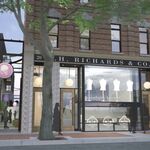
Yes, just across the street and very visible from a major hotel, you would think a nice cafe would do well in this spot.I'm still holding out for a Block 1912-like spot there, even a French cafe.
It's such a great corner and needs something that caters to the hotel/business crowd and really acts as a gateway into RHW.
I completely agree. There is clearly market capacity for several more Rosewood or Iconoclast-level businesses in the area.I'm still holding out for a Block 1912-like spot there, even a French cafe.
It's such a great corner and needs something that caters to the hotel/business crowd and really acts as a gateway into RHW.

I for one am more than happy to distort market conditions to benefit downtown residential construction. Bring all the grants and incentives!Coming to the Executive Committee on March 4: Downtown Attainable Housing Program.
"The Program would fund an estimated 570 to 850 attainable units, and up to 3400 total units depending on what proportion of units are attainable. This would leverage private investment, and support construction jobs. If 50 percent of units are attainable, projects qualifying for this program would contribute net revenue of $30 million over 10 years to the CRL."
"Successful applicants will receive an annual grant for a maximum of 10 years that is equivalent to the uplift in municipal property taxes (including both the municipal and education equivalents of the Community Revitalization Levy) that result from development, multiplied by the proportion of attainable units. Developers will be required to maintain attainable rental rates for the 10-year grant period (current rates shown in Attachment 2). A minimum of 25 per cent of the units must be attainable. Renovations or conversions would not be eligible. For example, a development where 50 per cent of the units are attainable would receive an annual grant payment equivalent to 50 per cent of the tax uplift. Full details of the Program, including detailed calculation formulas and examples, are provided in Attachment 2."
Attainable housing is defined as: "...a unit that is rented for 30 per cent of median renter income for a single bedroom unit. This is distinct from how the City defines Affordable Housing, which requires government funding for construction, operation or both, and are rented at below-market rates to low-income households. Further comparison is provided in Attachment 2." Since the definition is based on one-bedroom units, the report states: "For units with multiple bedrooms, a modifier has been added to this criteria to ensure the program attracts a variety of attainable unit mixes."
Here's the full program guide (which is the attachment 2 referenced above).
The report also has this little nugget about the impact of other incentive programs: "The City is also providing other incentives that are supporting downtown housing. These include the Downtown Student Housing Incentive (tentatively supporting more than 500 new units), the Infill Infrastructure Fund (supporting 1669 new units downtown) and the Village at Ice District Infrastructure project (supporting an initial 354 units by 2028 and up to 2500 in total)."


Here's the Schedule, just so others can see the numbers that @kcantor is analyzing.Well I'm not so sure about this one...
Taking a quick look at the numbers in the Schedule, they used an example of a property with a current assessment of $5,000,000 and a future assessment of $42,000,000. After investing that $37,000,000 in additional monies to complete the project. This program would then provide a stabilized rebate on future property taxes of $160,000 per year for 10 years.
That $160,000 per year represents an additional "return" to the developer of 0.43% on his incremental investment. In exchange for that, the developer needs to front end all of the development costs and accept a minimum $78,000 in reduced rents (assuming all units are one bedrooms as the "qualifiers" for others are not apparent) to qualify for that rebate - roughly 0.21% of his incremental investment. The net return to the developer from this program is therefor 0.22% for which he is expected to cede project control of 40% of his project and incur his accounting a reporting costs to participate.
In my experience, new development projects don't proceed or not proceed on the basis of a 0.22% incremental return. So, unless I'm missing something, this is an ongoing program that the city needs to administer - which won't come for free - for some 14 years or longer that won't actually increase the housing stock that would be developed without it.
If I'm missing something here, I'd be happy to know what it is...
This picture means nothing. There are thousands of more units downtown vs riverbend for example. Doesn’t mean riverbend has high demand, there’s simply low supply there.Edmonton's housing shortage (assuming one exists, not making an inference one way or another) is not proportionately represented by Downtown vacancy. This is pouring water into a lake while the plants die.
Affordable housing investment should go where people want to live, not where the City wishes they would move. For example, SE Edmonton has a lack of rental supply, while current DT rental properties are having to offer staggering incentives just to get renters to agree to a one-year lease, which are seldom being renewed.
View attachment 716468