News   Apr 03, 2020
 9.1K     3 
News   Apr 02, 2020
 10K     0 
News   Apr 02, 2020
 3.3K     0 

General Infill Discussion

There are areas with the immediately post WW II housing that are well located and probably need some renewal. It would be good to focus more density and development particularly in these areas.
 
1748411657023.jpg


These are the lots in question.

Timberhaus plans to build a couple multifamily buildings (and save the tree) according to their website.

These lots have been empty for years, will be great to get something built.

The rezoning is okay. 👍

They said we’re planning to build a couple multifamily homes…but currently building a SFH on the lot in from the corner.

Better than an empty lot though. ¯\_(ツ)_/¯
 
There are areas with the immediately post WW II housing that are well located and probably need some renewal. It would be good to focus more density and development particularly in these areas.
It would be interesting to look at the density of those areas you’re referencing vs the density being achieved in all of the newer greenfield communities and calculating how much infill it would take to absorb the one million additional Edmontonians projected to live here in the next 15 years.

At an average 2.5 persons per household, we need to increase our housing stock by roughly 400,000 units to accommodate that growth. I’m not sure how much of that you can expect to come from infill when the city’s total single family inventory is still less than 200,000 - ie we could replace every single single family home in the city with a duplex and we’d still be short 200,000 homes.

While large amounts of mid/high rise projects will help satisfy the unit counts needed, we’re still a long way from that product satisfying consumer preferences for most of the market.
 
Some of those older houses are not that large and often the people living in them don't have large families. So say replace three houses with a multi storey residential building (I know not for everyone) and you now have a location that accommodates 4x as many people or more. I'm not saying this is the only solution, but it takes some pressure off other areas and it is better to increase density more in areas that are not so far away.
 
It would be interesting to look at the density of those areas you’re referencing vs the density being achieved in all of the newer greenfield communities and calculating how much infill it would take to absorb the one million additional Edmontonians projected to live here in the next 15 years.

At an average 2.5 persons per household, we need to increase our housing stock by roughly 400,000 units to accommodate that growth. I’m not sure how much of that you can expect to come from infill when the city’s total single family inventory is still less than 200,000 - ie we could replace every single single family home in the city with a duplex and we’d still be short 200,000 homes.

While large amounts of mid/high rise projects will help satisfy the unit counts needed, we’re still a long way from that product satisfying consumer preferences for most of the market.
We certainly will need a significantly higher proportion of medium and high density. Much of downtown and the quarters will need to fill in to help with this, along with some substantial TODs.
 
We certainly will need a significantly higher proportion of medium and high density. Much of downtown and the quarters will need to fill in to help with this, along with some substantial TODs.

I could almost swear there are more parking lots than housing in the Quarters, even with the Valley Line LRT running through it.

1748755473383.png
 
The Council Agenda for tomorrow's ZBR 1-Year Report had an addendum stuck on, late last week. It details the proposed changes to the Zoning Bylaw, specifically introducing minimum design standards for row housing in RS zones. I'll link it below for the LUB-savvy folks, but for those who are just interested in the highlights:

  • All row housing must use design techniques to provide visual interest and eliminate large, blank walls.
  • All row housing must have a main entrance facing the street, with a covered entrance feature.
  • All row housing must face the street, and the street-facing wall must have windows on 15% or more of the surface area.
  • On corner lots, all principal building facades facing a street must include consistent finishing materials and features such as windows, doors, and porches.
  • Sliding patio doors can no longer serve as main dwelling entrances.
Here's the full redline document.

Also one more pitch for the SRC folks to speak at the City Council meeting tomorrow, you can register to speak until 9:30AM tomorrow. Here's the link to register to speak.

Good luck to everyone participating in the public engagement tomorrow. It's going to be zesty.
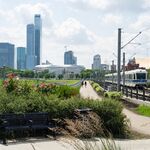
 
The Council Agenda for tomorrow's ZBR 1-Year Report had an addendum stuck on, late last week. It details the proposed changes to the Zoning Bylaw, specifically introducing minimum design standards for row housing in RS zones. I'll link it below for the LUB-savvy folks, but for those who are just interested in the highlights:

  • All row housing must use design techniques to provide visual interest and eliminate large, blank walls.
  • All row housing must have a main entrance facing the street, with a covered entrance feature.
  • All row housing must face the street, and the street-facing wall must have windows on 15% or more of the surface area.
  • On corner lots, all principal building facades facing a street must include consistent finishing materials and features such as windows, doors, and porches.
  • Sliding patio doors can no longer serve as main dwelling entrances.
Here's the full redline document.

Also one more pitch for the SRC folks to speak at the City Council meeting tomorrow, you can register to speak until 9:30AM tomorrow. Here's the link to register to speak.

Good luck to everyone participating in the public engagement tomorrow. It's going to be zesty.
I think these are needed. There are some awesome rowhousing projects out there, and some really cheap, trashy, poorly designed ones going in. And with so many being rental, you don't get the same feedback loop as selling. If you design an ugly house, it's definitely harder to sell vs rent. So I fear builders won't upgrade designs as quickly on some of these rentals.
 

Back
Top